When the Pakistani government announced a jaw-dropping Rs. 55 per litre hike in petrol prices on March 7, 2026, most headlines focused on commuters and transporters. But for Pakistan’s growing technology sector its startups, software houses, e-commerce platforms, and logistics-tech companies the ripple effects are far more complex, and far more costly, than a fill-up at the pump.
The Numbers That Are Shaking the Economy
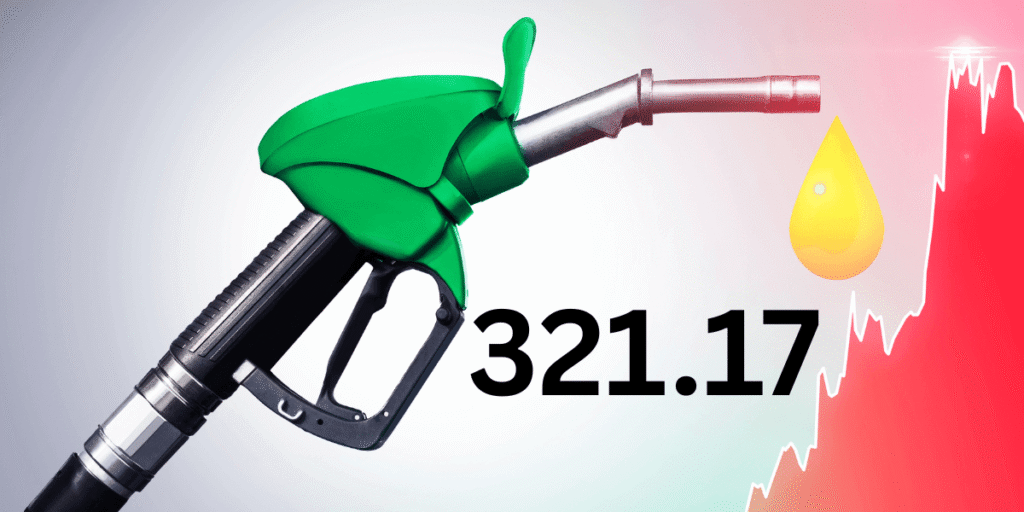
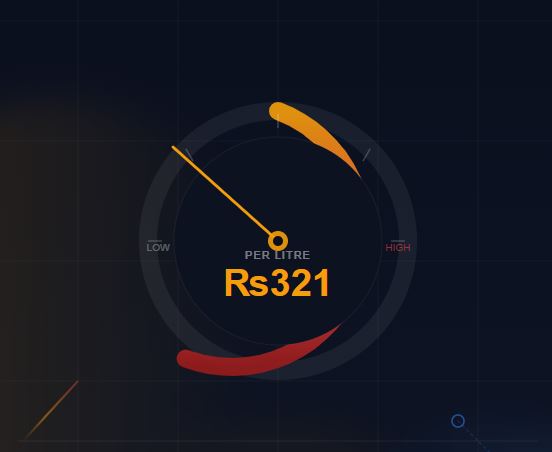
Pakistan’s fuel prices have reached historic highs in March 2026. Petrol (Motor Spirit) now sits at Rs. 321.17 per litre, up from Rs. 266.17 just weeks earlier. High-Speed Diesel (HSD) has surged to Rs. 335.86 per litre, an increase of Rs. 55 in a single announcement. The government has also shifted from its traditional fortnightly price review to weekly revisions, adding a new layer of unpredictability for businesses trying to plan ahead.
The triggers are both global and structural. Escalating Middle East tensions, disruptions to oil shipments through the Strait of Hormuz, and IMF conditions requiring Pakistan to pass fuel costs directly to consumers have all converged at once. The Pakistan Institute of Development Economics (PIDE) has warned that even a moderate disruption in the Strait of Hormuz could push national inflation above 12%, with monthly petroleum import costs rising by up to US$384 million.
For tech businesses, this isn’t background noise. It is a direct threat to their operating models.
The Hidden Fuel Dependency of Pakistan’s Tech Sector
At first glance, a software startup or an IT services company might seem insulated from petrol prices. After all, code doesn’t run on diesel. But Pakistan’s tech ecosystem is deeply entangled with the physical economy in ways that make it acutely vulnerable to fuel shocks.
Last-Mile Logistics and E-Commerce
Pakistan’s e-commerce sector has been one of the fastest-growing verticals in the country’s startup landscape, with companies like PostEx, Airlift’s successors, and dozens of last-mile delivery platforms staking their business models on affordable, efficient delivery. Every order fulfilled depends on a fleet of motorcycles, vans, and trucks all of which run on petrol or diesel.
With HSD at Rs. 335.86 per litre, logistics costs are not rising modestly they are spiking. Delivery companies must choose between absorbing losses or passing costs onto merchants, who then pass them onto consumers, who then reduce their orders. It is a feedback loop that kills e-commerce growth metrics quarter over quarter.
For platforms that operate on cash-on-delivery (COD) models still dominant in Pakistan each failed delivery is a fuel cost already spent with nothing to recover.
Ride-Hailing and Mobility Tech
Ride-hailing platforms in Pakistan have faced one of the most direct blows. Driver-partners, who bear their own fuel costs, are recalibrating their availability and surge price expectations. For companies like Bykea and InDrive, which have invested heavily in building driver supply networks, a fuel-price crisis translates immediately into driver churn and reduced platform reliability.
When drivers earn less per trip in real terms due to fuel costs, they either demand higher fares from the platform or reduce their hours. Both outcomes hurt user retention exactly the metric investors scrutinize most closely.
Generator Dependency in Tech Offices
Pakistan’s chronic electricity load-shedding problem means that virtually every serious tech office, co-working space, and data center in the country runs diesel generators as a backup. With diesel now at Rs. 335.86 per litre, the cost of keeping servers running, powering development workstations, and maintaining air conditioning during outages has risen dramatically.
For smaller startups operating out of Lahore’s tech hubs or Karachi’s co-working spaces, generator fuel is a fixed overhead cost that has just become significantly more painful. For larger software houses with 24/7 operational requirements, it represents a measurable hit to monthly burn rates.
Employee Commute Costs and Talent Pressure
Pakistan’s tech talent pool is concentrated in a few urban centers — Karachi, Lahore, and Islamabad. Most developers, designers, and product managers commute by car or motorbike. A petrol price of Rs. 321.17 per litre means that a mid-level developer commuting 30 km daily is spending meaningfully more of their rupee salary just getting to work.
This creates salary pressure. As the real purchasing power of PKR-denominated salaries erodes with every fuel hike, tech companies face renewed demands for pay raises — at precisely the moment when their own operating costs are climbing. The startups that cannot absorb this squeeze are the ones already teetering on the edge.
A Sector Already Under Stress
It would be easier to absorb this shock if Pakistan’s tech ecosystem were in robust health. It is not.
Pakistan’s startup funding plunged nearly 77% from its 2022 peak, reaching $75.6 million in disclosed funding in 2023. The venture capital winter has thawed only slightly since then. Investors who remained active have dramatically tightened their criteria, now demanding a clear path to profitability within 12 to 18 months rather than the growth-at-all-costs mentality of the 2021 boom years.
Economic challenges including rising interest rates, rupee devaluation, and high inflation had already diminished the country’s appeal as an investment hub before this latest fuel shock. International VCs who denominate investments in dollars are especially cautious, given that Pakistani startups generating rupee revenues face a currency mismatch that is painful in normal times and potentially fatal during an inflation spike.
The startups that have survived and there are impressive ones are lean, focused, and solving real problems. But lean operations are also the ones with the least cushion to absorb unexpected cost increases.
Who Gets Hit Hardest
Not all tech businesses are equally exposed. The fuel shock creates distinct categories of vulnerability:
High Exposure: Logistics-tech companies, ride-hailing platforms, agri-tech startups that work directly with rural supply chains, and any business model that touches physical delivery. These companies have direct, unavoidable fuel costs embedded in their unit economics.
Medium Exposure: SaaS companies and software houses with large on-site teams, co-working space operators, and edtech platforms that supplement online learning with physical touchpoints. Their exposure is mainly through infrastructure costs and employee commuting pressure.
Lower Exposure (but not immune): Pure-play remote software exporters billing in dollars. These companies benefit from the exchange rate side of the equation but still face indirect pressure through vendor costs, internet and power infrastructure, and a talent market where everyone is struggling with higher living costs.
The Silver Lining: Disruption as Opportunity
Pakistan’s tech sector was, to a significant degree, built on the back of earlier economic shocks. The COVID-19 pandemic, paradoxically, accelerated digital adoption and created the conditions for the 2021 startup funding boom. Crisis has historically been one of Pakistan’s most productive catalysts for technological innovation.
This fuel crisis is already generating a similar dynamic in several areas.
Electric Vehicle Technology: With petrol above Rs. 320 per litre, the economic case for electric two- and three-wheelers in Pakistan has never been stronger. Companies like Mode Mobility, focused on battery-electric scooters, are seeing their addressable market expand rapidly as the total cost of ownership gap between EVs and petrol vehicles closes dramatically. For delivery fleets and ride-hailing drivers who cover high daily mileage, the math is becoming compelling.
Remote Work Infrastructure: Every company that reduces commuting by enabling remote or hybrid work directly reduces its fuel exposure. This creates new demand for remote collaboration tools, digital HR platforms, and cloud-based workflows all areas where Pakistani tech companies have been building capability.
Agri-Tech and Supply Chain Efficiency: When transport costs surge, every inefficiency in Pakistan’s agricultural and retail supply chains becomes more expensive. This makes the value proposition of agri-tech startups like Crop2x, which use AI and IoT to reduce waste and optimize logistics, more compelling to buyers who previously deferred adoption.
Dollar-Earning Freelancers and Export-Oriented Startups: Pakistan’s large and growing freelance tech workforce consistently among the top globally in platforms like Upwork earns in dollars and spends in rupees. A fuel-driven inflation environment, while painful for domestic consumer businesses, can actually improve the competitive position of export-oriented tech talent and the startups built around them.
What Tech Businesses Should Do Right Now
The companies that will navigate this period successfully are those that treat fuel-driven inflation not as a temporary anomaly but as a structural feature of Pakistan’s operating environment for the next 12 to 24 months.
Several practical responses stand out:
Restructure logistics contracts now. Companies with delivery operations should renegotiate contracts to include fuel cost pass-through clauses rather than bearing full exposure to weekly price revisions. Fixed-price delivery contracts signed before March 2026 are now underwater.
Accelerate EV fleet transition. For any company running a delivery or mobility fleet, the financial case for piloting electric vehicles has crossed the threshold from “interesting” to “urgent.” Even a partial transition reduces exposure to future fuel shocks.
Model cash flows with fuel-driven inflation assumptions. A 12% inflation scenario, as PIDE warns, is not a tail risk it is an increasingly plausible base case. Companies that have built their 2026 financial models on 7-8% inflation need to stress-test them immediately.
Double down on remote work capabilities. Reducing the daily commuting burden on employees is not just a quality-of-life benefit in the current environment, it is a meaningful retention and cost tool. Companies that invest in remote infrastructure now will find it easier to attract and retain talent as living costs rise.
Prioritize dollar-revenue streams. For startups with the ability to serve international clients or access export markets, this is the moment to pursue that strategy aggressively. Earning in USD while costs are denominated in PKR provides a structural hedge that no operational efficiency can replicate.
The Bigger Picture
Pakistan’s petrol price crisis is not simply a story about fuel. It is a story about the compounding pressures facing an economy that imports a large proportion of its energy needs, operates in a volatile currency environment, and is navigating an IMF program that limits the government’s ability to shield consumers from global price shocks.
For the technology sector, the question is not whether these pressures will affect business they already are. The question is whether Pakistan’s tech ecosystem has the resilience, creativity, and capital efficiency to adapt faster than the costs rise.
Based on recent history, the answer is cautiously yes. Pakistan’s tech sector has survived currency crises, funding winters, political instability, and infrastructure deficits. The companies and founders that remain are, by definition, the ones who know how to build under pressure.
But knowing how to survive pressure and knowing how to thrive in it are two different things. The fuel shock of 2026 is, in its way, another filter one that will separate the businesses built on solid unit economics from those sustained by optimism alone.
The pump price may be Rs. 321 per litre. The real cost, for Pakistan’s tech economy, is considerably higher.
Data sourced from OGRA official notifications, ARY News, Pakistan Today, PIDE, and TechJuice. Prices current as of March 14, 2026.Share